
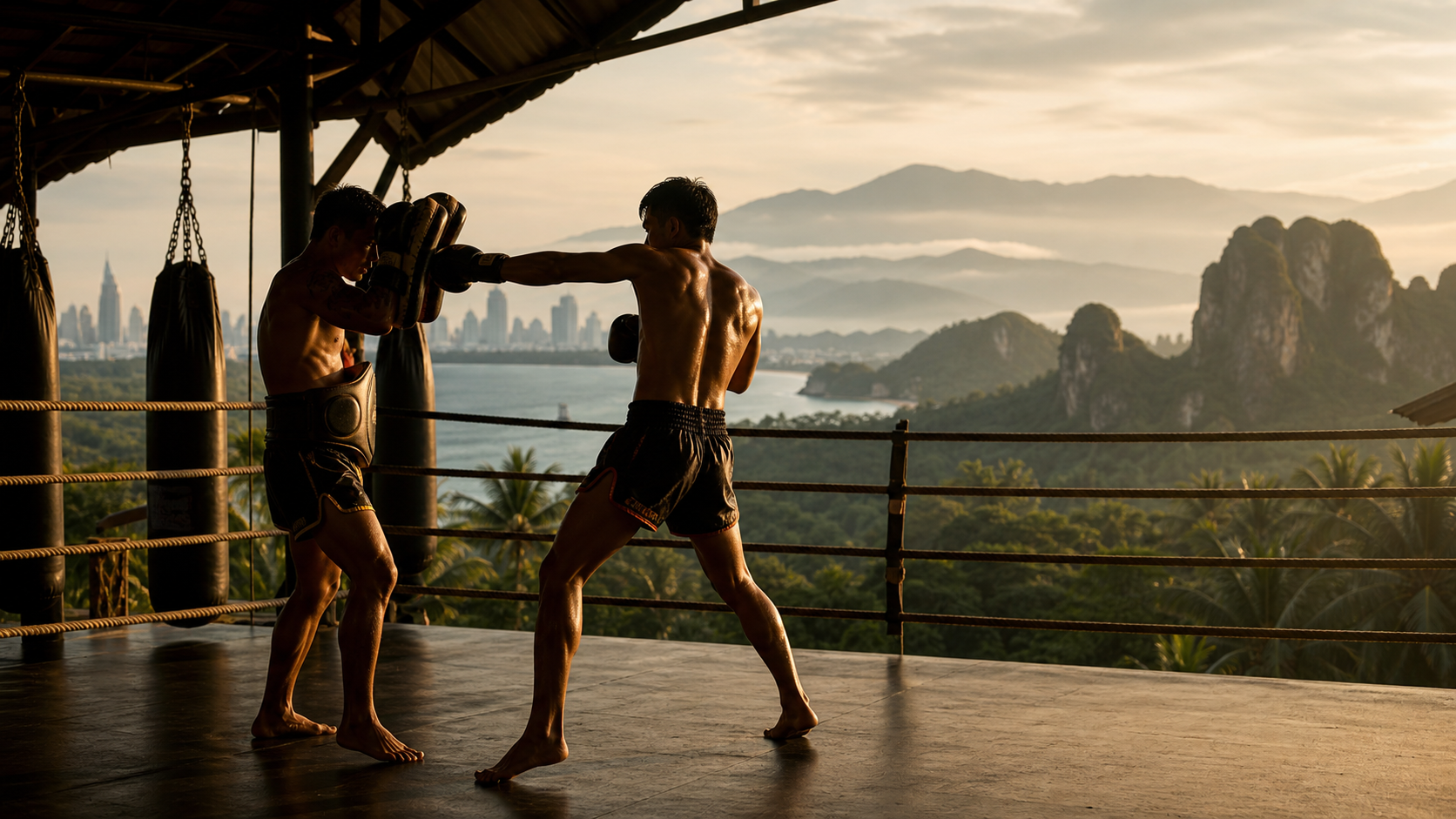
Choosing where to train Muay Thai in Thailand is almost as important as choosing the gym. Bangkok, Phuket, Chiang Mai and Krabi can all deliver serious training, but the rhythm of daily life is very different in each place.
The best destination depends on what you want outside the ring as well as inside it. A short training holiday calls for different priorities than a two-month fight camp. A complete beginner may value patient coaching and a simple commute, while an MMA athlete may need a weekly timetable that includes wrestling and Brazilian jiu-jitsu.
This guide compares the four most common bases without pretending there is one universal winner. Use it to narrow the search, then compare Muay Thai and MMA camps on Fight Camp Finder before committing to a long stay.
Quick answer: which destination suits you?
- Bangkok: best for a huge choice of training styles, city access and people who want Muay Thai to be part of normal urban life.
- Phuket: best for a training holiday, beach time and a large international combat-sports scene.
- Chiang Mai: best for a calmer routine, longer stays and people who prefer northern Thailand to an island or megacity.
- Krabi: best for a quieter beach base and trainees who are comfortable choosing from a smaller gym scene.
Those are starting points, not rankings. A well-run gym that matches your level will usually matter more than the city name.
Bangkok: maximum choice and an authentic city routine
Bangkok makes sense when training quality and variety come first. The capital has traditional Muay Thai gyms, modern fitness studios, boxing programmes and mixed-discipline academies. It is also easy to combine training with work, food, shopping and the rest of city life.
The main challenge is distance. A gym can look close on a map and still require a tiring trip at rush hour. For a camp-style schedule, staying within walking distance or a simple train ride of the gym is often a better decision than booking the most exciting neighbourhood.
Beginners who want a convenient central introduction can compare a studio such as Project H Muay Thai Gym. Travellers who specifically need MMA and grappling on the same timetable can inspect a multi-discipline option such as INNOV8 MMA Bangkok. These links are examples to research, not blanket recommendations; check current schedules directly and try a class where possible.
Bangkok is a strong fit if you:
- want the widest range of Muay Thai, boxing, BJJ and MMA options;
- need reliable urban infrastructure or plan to work during the trip;
- enjoy a busy city and do not need a beach atmosphere;
- are willing to choose accommodation around the gym.
Phuket: the easiest place to combine training and a beach holiday
Phuket has one of Thailand’s most visible international fight-camp ecosystems. Many visitors arrive specifically for Muay Thai, MMA, fitness or recovery, so training can become the centre of the trip without sacrificing beaches, restaurants and a social scene.
That convenience is the attraction, but it also means that gym atmosphere can vary. Some classes are built around visiting beginners, while others are aimed at active competitors. Class size, coach attention and the balance between technique and conditioning may change by time of day, so a drop-in session is useful before paying for a longer package.
Location matters here too. Phuket is larger than it can appear on a holiday map, and daily cross-island travel can become expensive or exhausting. Pick a training area first, then choose a beach and accommodation that fit the same side of the island.
For examples of different Phuket formats, compare Phuket King Muay Thai with the smaller technical boxing and Muay Thai setting at Oleydong Boxing and Muay Thai Gym. Always verify the latest timetable, accommodation details and coaching format with the camp.
Phuket is a strong fit if you:
- want Muay Thai or MMA to anchor a beach holiday;
- prefer a large international training community;
- want many camp, accommodation and recovery choices in one destination;
- are prepared to research the exact neighbourhood rather than treating Phuket as one small area.
Chiang Mai: a calmer base for building a routine
Chiang Mai often suits people who want to settle into a repeatable daily rhythm: train, eat, recover and do it again. The city and surrounding districts offer everything from urban gyms to quieter retreat-style camps, while the general pace is less intense than Bangkok.
That can be especially appealing for a longer stay. The trade-off is that trainees should check seasonal conditions rather than booking solely from old travel advice. Air quality in northern Thailand can vary, so anyone planning hard outdoor conditioning should review the live official data on Air4Thai before choosing dates and continue monitoring it during the stay.
A countryside programme can feel very different from a gym near the old city. For instance, Bangarang Muay Thai and Fitness Camp presents a retreat-style setting outside central Chiang Mai. That format may suit someone who wants fewer distractions, but another trainee may prefer to live in town and visit a local gym.
Chiang Mai is a strong fit if you:
- want a quieter training routine or a longer stay;
- prefer northern culture, mountains and city life over beaches;
- like the idea of either an urban gym or a more isolated retreat;
- are willing to check current air quality when planning hard training.
Krabi: a quieter beach alternative with fewer distractions
Krabi can work well for trainees who want sea, dramatic scenery and a less crowded feel than Thailand’s largest island destination. Areas around Ao Nang and elsewhere in the province have Muay Thai options, and the smaller scene can make the trip feel more focused.
The trade-off is choice. There are fewer camps than in Bangkok or Phuket, so a single timetable change matters more. Check that the gym teaches the sessions you actually need, at the level you need, during your exact dates. This is especially important for MMA athletes: a venue may use “MMA” broadly while offering little or no wrestling or BJJ in its current weekly schedule.
Krabi is not automatically cheaper, quieter or more personal at every gym. Treat those as possibilities to verify, not promises. Use the Fight Camp Finder directory to compare current Krabi listings and contact the camp before arranging a long stay.
Krabi is a strong fit if you:
- want a beach environment with a smaller training scene;
- prefer a focused holiday rather than a major fight-camp hub;
- have confirmed that a specific gym offers the right classes during your dates;
- do not need dozens of backup gyms within a short distance.
What beginners should check before booking a Muay Thai camp
A beginner does not need the most famous or hardest gym. You need a place where coaches can explain stance, balance, defence and basic combinations without turning every session into a survival test.
Ask these practical questions:
- Are complete beginners separated, paired carefully or coached within the main class?
- How much pad work and technical correction is included?
- Is sparring optional, supervised and appropriate for experience level?
- How large are the classes at the time you plan to train?
- Can you take a drop-in or private lesson before buying a package?
- Is the gym close enough that you will realistically attend twice a day if that is your goal?
Good sparring is controlled learning, not a test of toughness. Tell the coach your experience honestly, use the required protective equipment and do not feel pressured to spar hard. Travellers looking for additional suitable partners can also read how to find Muay Thai sparring partners in Thailand.
Muay Thai camp or MMA gym?
If your goal is pure Muay Thai, a focused striking gym can give you the repetition you want. If your goal is MMA, look past the label and inspect the actual weekly timetable. Useful questions include:
- How many wrestling, no-gi grappling and MMA sessions run each week?
- Are those sessions active during your travel dates?
- Is there structured sparring for your level and weight?
- Can one membership cover all disciplines, or are classes sold separately?
- Are there suitable training partners, not just equipment and an MMA sign?
Bangkok and Phuket generally give you more backup choices if a timetable does not fit. Chiang Mai also has mixed-discipline gyms, while Krabi requires more careful advance checking because the pool is smaller.
A simple booking strategy that reduces risk
- Choose the city by lifestyle and logistics. Decide whether you want a megacity, an international island hub, a northern routine or a quieter beach base.
- Shortlist two or three gyms. Compare discipline, location, class format and accommodation rather than relying on a single social post.
- Check the current timetable. Schedules, coaches and class sizes change.
- Try before committing when possible. A drop-in class reveals more than a highlight reel.
- Keep the commute simple. Consistency is easier when training is close to where you sleep.
- Extend only after the fit is clear. A flexible first few days can prevent an expensive mismatch.
Final verdict
Choose Bangkok for maximum variety and city access. Choose Phuket for the biggest training-holiday ecosystem and beaches. Choose Chiang Mai for a calmer long-stay routine, while checking live air quality. Choose Krabi for a quieter beach base when you have already found a gym whose schedule matches your goals.
The city narrows the field; the gym decides the experience. Start with the Fight Camp Finder camp directory, verify current details directly and choose the place you can train at consistently.